
|
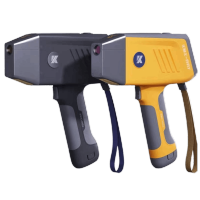
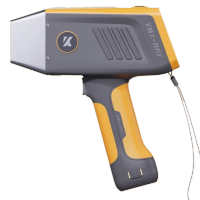
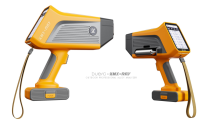
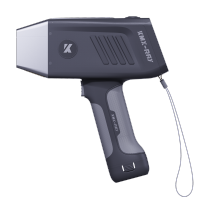
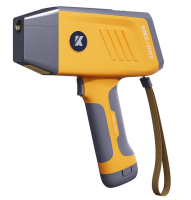
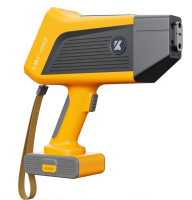
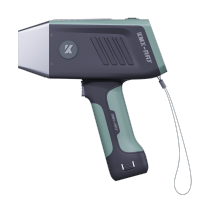
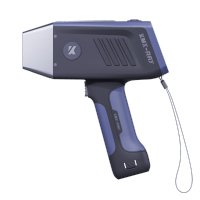
K-1000G Handheld ternary lithium Battery spectrometer
Collect
商品说明
The KMX-RAY handheld ternary lithium battery spectrometer detects elements such as Ni (nickel), Co (cobalt), and Mn (manganese) and their contents, quickly distinguishes material types (such as 622 type, 532 type, and 111 type lithium batteries), positive and negative electrodes, lithium batteries, lead-acid batteries, lithium iron phosphate power batteries, high-rate power batteries, ternary power batteries, and pouch cells. 18650 lithium battery cells, polymer power battery cells, aluminum shell battery cells, flat plate batteries, disassembled high-quality battery cells, electric vehicle battery packs, etc.
商品参数
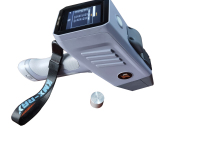
Technical Specifications of K-1000G Handheld Ternary Lithium Battery Spectrometer 1.Environmental requirements: Temperature should be between -20 and 50℃, relative humidity between 10% and 90%(without condensation), and there should be no strong magnetic fields, strong vibration sources or high-frequency equipment near the workplace. 2. Waterproof, dustproof, puncture-proof and drop-proof; The instrument has excellent balance. It can stand on the workbench during testing without the need for hand support. The one-button design ensures no fatigue even after prolonged operation 3. Excitation source: High-power miniature straight plate electron X-ray tube, with an excitation voltage of 35kV; No high-voltage cables, no radio frequency noise, better X-ray shielding, and better heat dissipation. Fixed voltage 35kV, current 100uA (Moxtek, USA), standard Ag target, W target, Rh target available for customization. 4. Adopting KMX technology, it offers a higher X-ray counting rate. The inner shell of the instrument is coated with conductive silver paint and the circuit board is covered with electronic shielding cloth to prevent electromagnetic interference and stabilize the elemental resolution design. 5. Detector: Si-pin detector, capable of simultaneously recording analysis data and spectra; Moxtek Si-PIN detector (6 mm², energy resolution 170eV) Test elements: Alloy mode: Customized for the conventional elements of lithium batteries (cobalt, nickel, manganese, copper) Ore mode (cobalt, nickel, manganese, copper, LE remaining elements) 6. Calculation method: KMX-FP test method without standard samples, which has been specifically modified in the database for the lithium battery recycling industry; 7. Touch or pull the trigger to control the start of the test. There is no need to hold the trigger for a long time during the test process. According to the customer's requirements, the trigger can also be held down continuously to test the sample. 8. Safety: Trigger lock function, with the locking time settable. When activated, neither the touch nor the trigger can perform the operation. 9. Battery: Original 7.2V large-capacity rechargeable lithium battery. You can directly check the battery level at the bottom without removing the battery. It is standard equipped with 2 lithium batteries 10. Film window replacement: The window film can be easily replaced without the need for tools. 11. Operating System: Windows CE 6.0 industrial-grade instrument dedicated operating system, safe and reliable; 12. Data display: Elements can be adjusted in the order of display or whether to display them according to the test requirements. 13. Data storage: 32GB embedded storage, standard 32G MicroSD card, capable of storing 150,000 groups of data and their X-Ray spectra, with expandable storage capacity; 14. Data export: One method is to directly export data through storage devices such as SD cards or USB flash drives. One way is to export the data through PC software; 15. Data format: pdf or Excel format, including element content, spectra, images, etc., and there are multiple templates to choose from. Instrument design features: 1. Excellent heat dissipation: More than half of the body is designed with an aluminum alloy shell. There is a slot-type heat dissipation device on the top of the instrument. The entire system makes heat dissipation very effective, extends the machine's lifespan, and makes the X-ray analyzer work more stably, thus having an extremely low failure rate 2. Simple operation: The design concept of the instrument is based on the principle of simplicity and economy. In terms of hardware, it adopts a fixed high voltage, eliminates the need for complex internal motors and filters, and has an external 316 calibration plate, among other simple designs. The software adopts a foolproof operation interface. Truly enable customers to obtain more profits at the lowest cost. Just three simple screen clicks can achieve a 45-second startup test and display the brand number and content in 0.8 seconds. 3. Humanized design: Light weight (1.6kg); Small in size (220mm*150mm*220) Sturdy and durable anti-drop wrist strap Battery power feedback lamp at the bottom of the instrument Top and bottom radiation warning flashing lights; Diamond-patterned soft rubber handle The instrument has excellent balance. It can stand on the workbench during testing without the need for hand support. The one-button design ensures no fatigue even after prolonged operation. The display screen adopts an integrated design of the entire machine, with a connected structure. The PDA is non-detachable, dust-proof, fog-proof, water-proof, and has a low failure rate. It is an industrial-grade high-resolution TFT touch display color screen with LED backlight. Pixels: 240×320 4. Precise test data: The instrument software adopts the basic parameter method. Before analyzing alloys, there is no need to know the type of alloy in advance, achieving fully automatic analysis. The standard library contains over 500 standard grades, capable of analyzing up to tens of thousands of alloys, and users can customize 300 types. The compensatory testing method for irregular or small samples can detect very small or few samples. Even a fine wire with a diameter of 0.04mm can be identified immediately. It can analyze 23 elements including Ti, V, Cr, Mn, Fe, Co, Ni, Cu, Zn, Hf, Ta, W, Re, Pb, Bi, Zr, Nb, Mo, Pd, Ag, Cd, Sn, Sb, etc.
The Application of Handheld XRF Spectrometer in the Detection of Ternary Lithium Batteries In recent years, the market for ternary lithium batteries has grown rapidly, and the demand for positive and negative electrode materials has also been increasing day by day. Ternary materials only include two types: NCM(lithium nickel cobalt manganese oxide) and NCA(lithium nickel cobalt aluminum oxide). NCM is currently the mainstream ternary material. As is known to all, improper use of lithium batteries can cause explosions. To prevent such safety accidents and ensure the service life of lithium batteries, as well as in terms of waste recycling and reuse, environmental pollution can also be avoided. What are the application scenarios of handheld XRF spectrometers in ternary lithium batteries? Identification of positive electrode materials for batteries Many serious battery accidents that occurred in the past were mostly caused by substandard batteries. Handheld XRF spectrometers are used to determine the elements and element contents of the positive electrode materials of batteries to ensure that the batteries meet the standards and are qualified. Quality control in battery manufacturing For battery manufacturers, the quality of materials, semi-finished products and finished products is of great significance. The handheld XRF spectrometer recommended by KMX-RAY can help inspectors accurately test each lithium battery sample under non-destructive conditions, making the inspection of finished products faster and more efficient. Recycling and sorting of used batteries Used batteries contain a large amount of heavy metal elements such as manganese, cobalt and nickel. Moreover, their electrolyte also contains highly toxic substances like lithium hexafluorophosphate and volatile substances. Improper disposal can cause serious damage to the environment. Before batteries are recycled, advanced detection equipment should be used for on-site rapid and accurate analysis and testing. This not only avoids environmental pollution but also improves the utilization efficiency of batteries, creates new profit margins, and reduces the cost of battery production. Handheld XRF spectrometers can conduct on-site detection and rapid classification of a large number of spent Japanese batteries. The model and composition content of used batteries can be obtained within seconds, providing necessary information for both buyers and sellers to make prompt and reliable judgments during transactions.
相关商品
|