
|
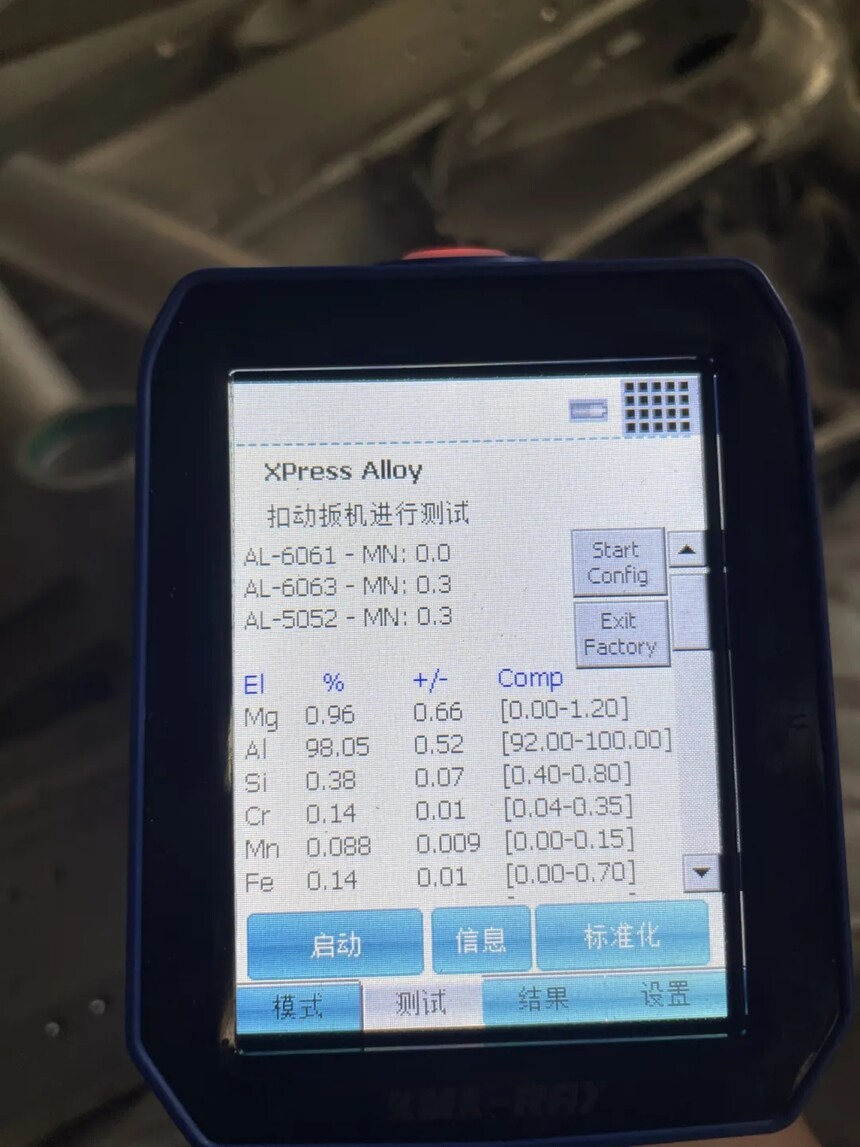
The key applications of handheld spectrometers in the aluminum processing industryUnder the trend of the manufacturing industry pursuing lean production and high quality, the demand for precise material inspection in the aluminum processing industry is increasing day by day. Aluminum alloy material identification, as a core link in the Quality Management Process (PMI), is undergoing technological upgrades with the aid of new handheld spectrometers, providing efficient support for raw material control, production processes, and finished product inspection. 01 Core advantages of the equipment and detection capabilities Handheld spectrometers are renowned for their portability and high-precision detection, and are suitable for non-destructive analysis of various forms of materials such as aluminum ingots, profiles, and thin plates. The instrument can complete the elemental composition detection within 30 seconds, accurately identify the aluminum alloy grade and analyze the elemental content. 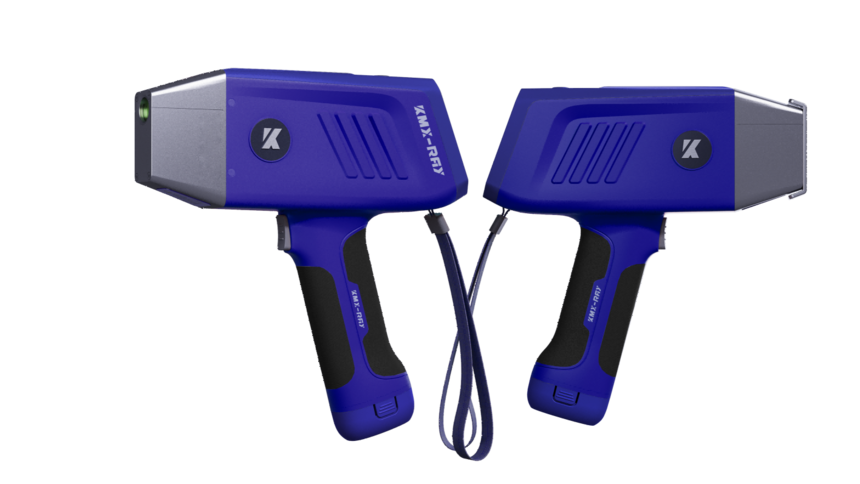 KMX-RAY handheld spectrometer Pure aluminum testing: For industrial pure aluminum, it can accurately determine impurity elements such as iron and silicon, avoiding the influence of impurities on the material's electrical conductivity and plasticity. Aluminum alloy analysis: Covering mainstream alloy systems such as Al-Cu, Al-Mg, and Al-Si, quickly verifying the ratio of main components to trace elements to ensure compliance with standards such as ASTM and GB/T. Aluminum matrix composites: Support the determination of aluminum matrix content in new materials and the monitoring of the uniformity of reinforcing phase distribution, providing data support for material research and development and process optimization. 02 Full-process quality control application ❶ Raw material procurement link By randomly inspecting the incoming aluminum ingots, batches with abnormal composition can be quickly screened out. For instance, for casting aluminum alloy raw materials, real-time monitoring of key elements such as Si, Fe, and Cu is carried out to prevent subsequent processing defects caused by composition deviations.
❷ Production process control In processes such as profile extrusion and thin plate rolling, key alloying elements (such as the Mg/Si content of 6063 profiles and the Mn element of 3004 thin plates) are detected online, and process parameters are adjusted in real time to avoid strength fluctuations or decline in processing performance caused by uneven composition. ❸ Finished product quality inspection Final inspection and control are carried out for aluminum alloy products in fields such as automobiles, construction, and aerospace. Automobile manufacturing: Testing the mechanical strength and corrosion resistance of aluminum alloys used for engine components to ensure component reliability; Aerospace: Strictly screen the main components of high-strength aluminum alloys used in the fuselage (such as 7075) to ensure that the mechanical properties of the materials meet the standards. Building materials: Verify the purity of elements before surface treatment of profiles to reduce the risk of oxide film defects. |