
|
The Wonderful chemical element | Important Metal Strategic Resource - Germaniumgermanium
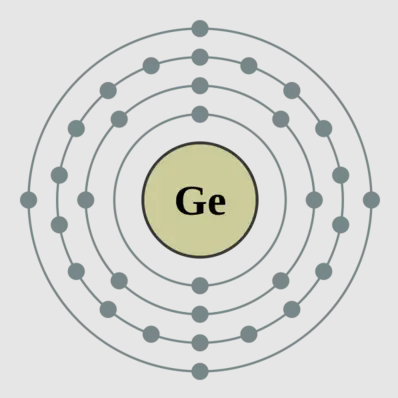
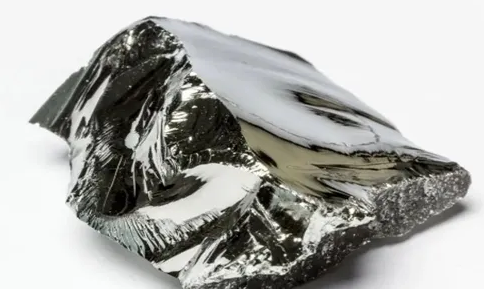
Germanium, with the English name Germanium, is a chemical element. Its chemical symbol is Ge, with an atomic number of 32 and an atomic weight of 72.64. It belongs to Group IVA elements. Melting point: 937.4℃, boiling point: 2830℃, density: 5.35g/cm³, hardness: 6-6.5. Germanium is a grayish-white metalloid with a lustrous appearance and a hard texture. It belongs to the carbon group and has distinct non-metallic properties. Germanium has stable chemical properties and does not react with air or water vapor at room temperature. However, it can rapidly form germanium dioxide at 600 to 700 degrees Celsius. Germanium has a content of approximately 0.0007% in the Earth's crust and is one of the most dispersed elements in the Earth's crust. There are almost no relatively concentrated germanium deposits. A large amount of germanium exists in a dispersed state in silicate ores of various metals, sulfide ores and various types of coal. Germanite is also produced in some copper, iron, sulfide and silver ores. Trace amounts of germanium are contained in rocks, soil and springs. Many plants contain limited amounts of germanium, such as Rensan, Dangsan, Angelica dahurica, wolfberry, aloe vera, Ganoderma lucidum and tea, etc. A Brief History of the Discovery of Germanium
Mendeleev predicted its existence in 1871. Fourteen years later, in 1885, the German chemist Winkler discovered germanium while analyzing germanium sulfide ore. Later, germanium was produced by heating germanium sulfide with hydrogen. Mendeleev named it silicon-like. In 1886, when Professor Winkler of analytical Chemistry at the Freiberg Institute of Mining in Germany (TU Bergakademie Freiberg in the 21st century) was analyzing a new mineral - argyrodite (4Ag2S·GeS2) discovered near Freiberg, Germanium was finally discovered after an unknown new element was discovered and their inference was verified through experiments. The source of germanium
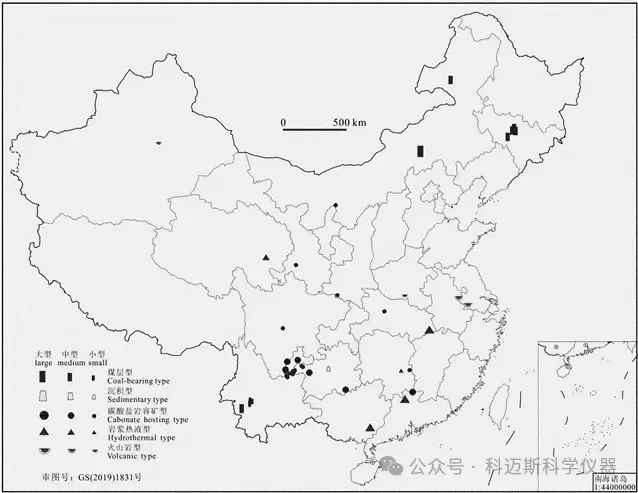
Germanium, as an important rare dispersed metal, has a relatively low content in the vast majority of rocks. It is commonly found in polymetallic sulfide deposits rich in copper and zinc and coal mines. It occurs as an associated mineral and is often enriched in six geological environments: iron meteorites and terrestrial iron-nickel. Sulfide deposit Iron oxide deposits Oxidation zone of germanium-containing sulfide deposits Pegmatite, gabbro, skarite Coal and lignified wood. However, the successive discovery of some independent deposits of dispersed elements in the southwest of our country, such as the independent cadmium deposit in Niujiaotang, the independent thallium deposit in Lanmucang and Nanhua, and the independent tellurium deposit in Dashuigou, has broken the previous traditional understanding. Therefore, germanium deposits are divided into two major categories: independent germanium deposits and associated germanium deposits. From the perspective of the distribution of proven germanium resources worldwide, the United States, China and Russia are the main holders of germanium resources globally, accounting for 45%, 41% and 10% respectively. This distribution pattern determines their significant positions in the germanium industry and influences the supply and demand relationship in the global germanium market. China is rich in germanium resources, which are widely distributed. The germanium-bearing deposits are mainly of the "lead-zinc type" and the "coal type". Among them, Inner Mongolia accounts for 65.34% of China's germanium reserves. Germanium reserves in Yunnan account for 9.64% of the national total. The "coal-type" in China is mainly distributed in Yunnan and Inner Mongolia, such as the germanium mine in Lincang, Yunnan, and the Wulan Tuga and Yimin coalfields in Inner Mongolia. The "lead-zinc type" includes the Huize lead + zinc deposit in Yunnan and the Fankou lead + zinc deposit in Guangdong, etc. China is also an important global supplier of germanium minerals. From 2019 to 2022, the world's average annual production of germanium was around 175 tons, while China's average annual production of germanium was around 122 tons. Among them, Yunnan is the main production base of germanium products in China, with an annual output accounting for about 34% of China's annual output and 24% of the global output. Over the past decade, China has cumulatively supplied nearly 70% of the world's germanium resources. The United States, Germany and Japan are China's main export destinations, with the annual export volume to these three exceeding 50% of the total export volume. The Application of germanium Germanium is an important semiconductor material with a variety of significant applications, mainly including the following aspects: Semiconductor industry Germanium is a key material in the manufacturing of semiconductor electronic devices and is often used to make diodes, transistors, composite transistors, germanium semiconductor optoelectronic devices, etc. Although most semiconductor devices have now been replaced by silicon, germanium is still used in high-frequency high-power devices and photoavalanche diodes. Optical fiber communication Germanium is used in optical fiber doping and photoelectric conversion to increase the refractive index of optical fibers and reduce the loss of signal transmission. Germanium optical fibers have excellent characteristics such as large capacity, low optical loss, low dispersion, long transmission distance and immunity to environmental interference, and they are the main body of optical communication networks. Infrared optics Germanium crystals are transparent to infrared light but opaque to visible and ultraviolet light. Therefore, they are used to make germanium Windows, prisms and lenses that specifically transmit infrared light, and are widely applied in military thermal imaging systems, astronomical observations and industrial inspections, etc. Solar cell Germanium is used in solar cells, especially in gallium arsenide solar cells, as a substrate material to extend service life and improve performance. In addition, germanium is also used in silicon-based thin-film solar cells as a silicon-germanium alloy to reduce costs. Biomedicine Germanium exists in the form of organic compounds in some natural plants, such as ginseng, angelica sinensis, wolfberry and Ganoderma lucidum, etc. These organic germanium compounds can enhance the immune function of the human body, protect it from damage caused by free radical reactions, and delay the aging process. In addition, germanium is also used to treat cancer and conditions with low white blood cells, as well as a component in medical toothpaste to treat gingivitis. Other applications: Germanium is also applied in thermoelectric cells, third-generation germanium quantum dot solar cells, superconductivity, glass semiconductors, fluorophores, lasers, fluders, thermistors, pretreatment of alloys in the electronics industry, optical industry, and petroleum refining catalysts, among other fields. Due to the strategic position of germanium and its application demands in various fields, the global demand for germanium has been continuously increasing, especially in areas such as infrared optics, optical fiber communication, and solar cells. In the future, with the continuous development of technology, the application fields of germanium will be further expanded. The Application of Handheld Spectrometers in Germanium Metal Recovery and germanium ore mining In the germanium metal recycling industry, the application of handheld spectrometers is becoming increasingly common. A handheld spectrometer is actually a portable spectral analysis instrument. It can quickly and accurately analyze the chemical composition and element content of metal materials, which can greatly improve the efficiency and quality of recycling. Handheld spectrometers can detect a wide variety of elements, including iron, copper, aluminum, zinc, magnesium, titanium, and so on, as well as precious metal elements such as gold, silver, and platinum. In the process of germanium mining, handheld spectrometers can also come in handy. It can quickly detect the germanium content in the ore, thus helping miners quickly identify and classify germanium ore. Moreover, handheld spectrometers can also be used for grade analysis of ores, which can help miners determine the mining value of ores. The application of the KMX-RAY handheld spectrometer in germanium metal recovery and germanium ore mining is becoming increasingly widespread. It can not only help improve the recovery efficiency and quality, but also assist miners in quickly identifying and classifying germanium ores. It is a powerful helper for enterprises. |