
|
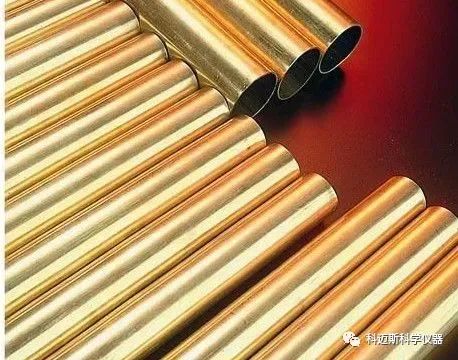
KMX-RAY Handheld Spectrometer | The Ultimate tool for copper alloy material analysisCopper alloys have excellent material properties and can be used in many scenarios. Over the past several thousand years, pure copper has always been one of the most important metals. Compared with other metals, its greatest advantage is: Good electrical conductivity, high thermal conductivity, an outstanding combination of strength and plasticity, and corrosion resistance in many environments.
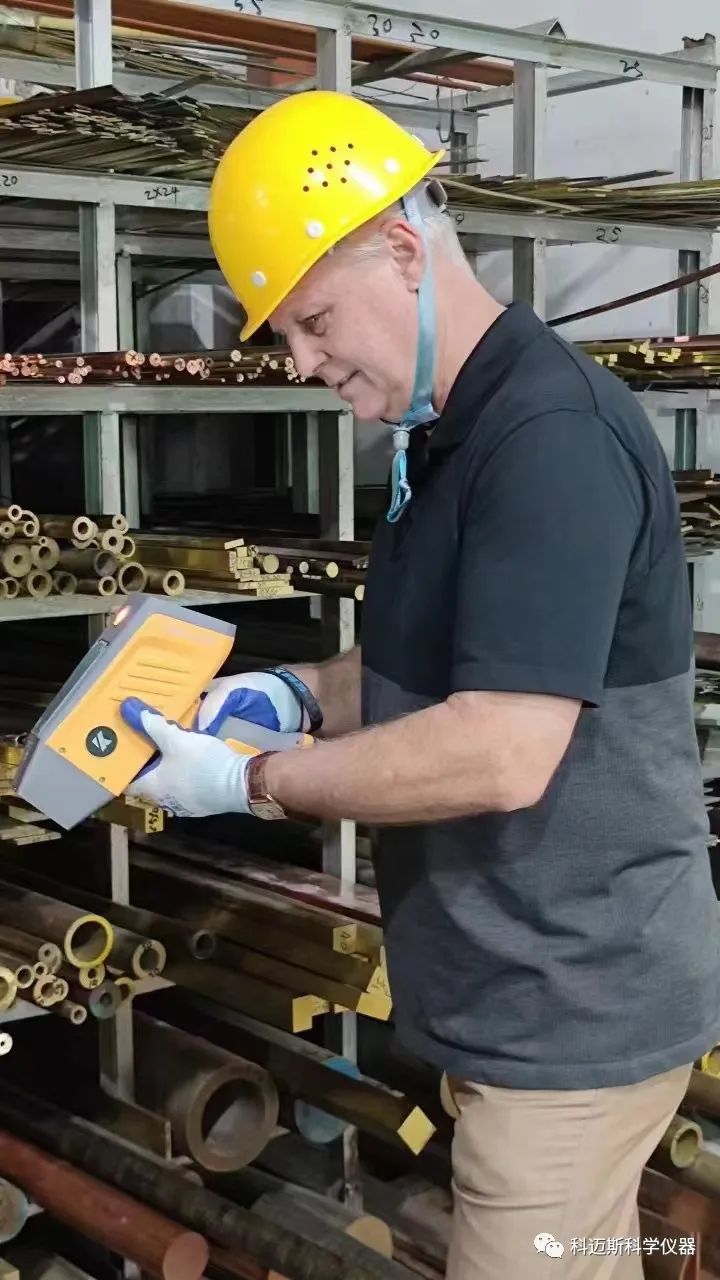
Many properties of copper, including diamagnetism, are also present in its alloys. A variety of alloying elements enhance other required properties. Although the price of copper is relatively high, its alloys, brass, bronze and white copper, still hold an unshakable position in various fields, including engineering. Brass Adding zinc to copper will enhance the strength of the alloy. Meanwhile, its plasticity also increases, which is a very important function. 10-20% zinc alloys are called gold-plated metals and are used in the jewelry industry and the production of heat exchangers. 30% zinc alloy is called ammunition barrel brass. The maximum threshold of zinc in formable brass is approximately 35%. Adding other alloying elements can further improve the performance of brass. For example, tin and aluminium enhance its corrosion resistance in seawater. Single-phase brass Application scope: jewelry, artworks, tableware, Musical Instruments and ammunition casings. Single-phase brass has a zinc content as high as 37% and is known as Alpha brass. It features a uniform crystal structure, is softer and has greater ductility. These qualities make Alfa brass suitable for cold working, drawing, bending and other processes. Biphasic brass Application scope: Parts made of heat exchangers, capacitors, automatic cutting worktables, etc. Duplex brass contains both α and β phases simultaneously, that is, both α grain structures and β grain structures exist. Duplex brass is cheaper than single-phase brass because it uses a large amount of zinc, but it is also prone to corrosion. Its chemical composition endows it with greater strength and hardness, thus making it suitable for processes such as thermoforming and casting. Bronze Bronze alloys are classified into different types based on the alloying elements used. Tin bronze Application scope: springs, washers, coins, handicrafts, pump parts, pressure-resistant castings, bearings, etc. Its application depends on the percentage of tin used in the alloy. The maximum tin content in alloys suitable for cold working is approximately 7%, and these copper alloys have good plasticity. The maximum content of tin is approximately 20%. Starting from 5% tin, the structure of the alloy changes and requires some additional heat treatment, which leads to a porous structure. This is also the reason why they are not suitable for forming methods other than casting. The main application of duplex tin bronze is in the bearing industry. This structure has a good balance, where the α phase ensures impact resistance, while the hard and brittle compound bears the load and provides a certain degree of wear resistance. Zinc and lead are sometimes present in tin bronze. Zinc improves the quality of castings and also makes the alloy cheaper. This kind of bronze is also called gun copper because large guns were made of this material in the past. A small amount of lead helps improve the machinability of bronze. The lead content in lead bronze used as bearing material is relatively high (up to 25%). Aluminium bronze Application scope: coins, ship parts, ship hardware, sleeve bearings, pumps, valves, etc. Aluminum bronze has similar properties to tin bronze. Most of them are single-phase and suitable for cold forming, making them very suitable for making coins. In them, the aluminum content is usually between 6% and 12%. Duplex aluminium bronze can be used as a casting alloy or for hot working. Aluminum bronze with an aluminum content of approximately 10% is used to manufacture propellers, valves, pumps, etc. White copper Application scope: coins, ship equipment, electrical equipment, heat exchangers, cooling systems, shipbuilding, etc. Copper-nickel alloys are strong and highly malleable. Adding nickel (usually 2-30%) to copper can make the metal highly corrosion-resistant and have excellent electrical conductivity. Copper-nickel alloy at 40... When 50% nickel is present, there is almost no coefficient of thermal expansion and the resistance is also the greatest. Therefore, Constantan (a Cu-Ni alloy containing 45% nickel) is used in electrical equipment with large temperature variations. Corrosion-resistant copper-nickel alloys contain approximately 30% nickel, as well as small amounts of iron and manganese. They are particularly stable in salt water. So, how should we classify these copper alloys? Because the content of alloying elements in copper alloys varies, to measure accurately, the spectrometer's precision must be high enough. Copper alloys are different from aluminum alloys and steel. It is usually necessary to test materials with a content of 80% to 90%. XRF spectrometer is regarded as the best way to detect high-component materials. The KMX-RAY spectrometer is widely recognized by customers for its low detection limit, high detection accuracy, stability and reliability.
|