
|
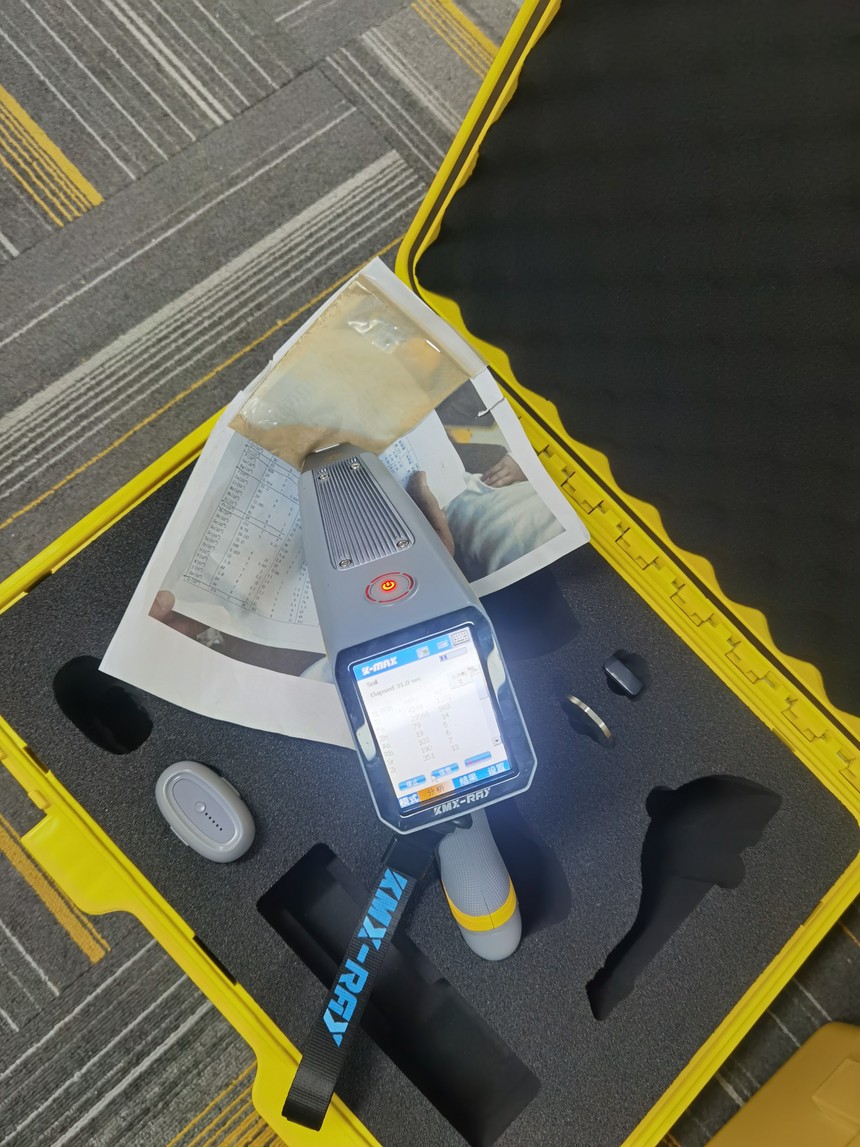
K-980PLUS Handheld Three-Way Catalytic Analyzer - Professional platinum, palladium and rhodium detection instrumentThe differences in the contents of platinum, palladium and rhodium and the corresponding price fluctuations are becoming important influencing factors for the purchase and recycling of three-way catalytic converters. The materials of the three-way catalytic converter can be either a ceramic base (bluestone coated with precious metal seal paint) or a metal base (coated with alumina seal paint containing precious metals). Nowadays, there is no technology that can analyze uneven materials like catalytic converters that have not undergone sample processing. Therefore, the ceramic catalytic converter needs to undergo shell removal treatment, that is, to take out the honeycomb-shaped ceramics from the metal. Then, the removed ceramics need to be crushed. On the contrary, for catalytic converters with metal substrates, the first step is to crush them. Then, the metal parts need to be separated from the sealing powder containing precious metals through magnetic separation and air separation. Due to the enrichment treatment during the production of catalytic converters, the metal content of catalytic converters with metal substrates is much higher than that of those with ceramic substrates. For the processing of these two types of catalytic converters, they are both crushed into powder with a diameter of 250 microns. The KMX-RAY K-980PLUS handheld three-way catalytic analyzer is used to determine the content of platinum, palladium and rhodium three-way catalytic converters. The internal ceramic honeycomb structure of the catalyst converter is coated with a repair base surface coating containing Pt, Pd and Rh, and other elements can also be present to benefit the catalytic converter. Knowing the precious metal content of the catalyst material is crucial for the recyclables to be able to correctly price their materials. The K-980PLUS Komas handheld three-way catalytic analyzer can quickly and accurately determine the precious metals in the catalyst powder on site, thereby greatly improving the test throughput and profit. It can provide material composition analysis information quickly on site, featuring high precision, fast speed and non-destructiveness. The XRF spectrometer offers a solution for minimal sample preparation and rapid on-site analysis of used automotive catalysts. The total test time of the KMX-RAY K-980PLUS handheld three-way catalytic analyzer is 30 seconds. Palladium and rhodium are analyzed in the main filter for the first 5 seconds, and platinum is detected in the secondary filter for the last 15-30 seconds.
Another important parameter of XRF equipment is the repeatability of analysis. Take 7 measurements of the sample for 30 seconds each time. The average values of pt, pd and rh contents, standard deviation (Std Dev) and relative standard deviation (RSD) are calculated from the following data Measure the same sample seven times consecutively
Conclusion The KMX-RAY K-980PLUS handheld three-way catalytic analyzer adopts the world-leading FP advanced algorithm without standard samples, eliminating the matrix effect and mineral effect to the greatest extent and providing accurate results within 30 seconds. Comas offers an accurate, rapid and easy-to-use rapid screening detection method for determining the contents of Pt, Pd and Rh in prepared automotive catalyst samples. The high value of platinum group elements makes the accurate determination of these elements of significant commercial significance. Technical advantages of the three-way catalytic converter spectrometer: 1. Good performance It features high precision, approaching the level of our laboratory-level analysis technology. It can visually display the combined number and different percentage contents of elements as well as the ppm content. 2. Unique advanced technology By adopting unique advanced technology, the performance of the handheld alloy analyzer has been raised to the true laboratory level. The si-pin detector is organically combined with the idea of geometric structure optimization design. Compared with the instruments of traditional information technology, its analysis development speed has increased by about 10 times, the accuracy of analysis results can be improved by about 3 times, and it has very high sensitivity and detection system accuracy. 3. Fast speed and simple operation The entire analysis process only takes 30 seconds to complete and the identification only takes 5 seconds. The operation is simple and even non-technical personnel can master it easily. 4. Special structure It adopts a tough plastic sealed shell, which is lightweight, sturdy and durable. The sealed integrated system design is dust-proof, water-proof and corrosion-proof, and can be used for safety management under various different conditions. 5. Strong antiviral ability It is equipped with an integrated operating system, eliminating the need for an external PDA. It features fast computing speed and toxic immune function. 6. Non-destructive testing Unlike the destructive testing research method, the sample was not damaged at all during the entire system testing process.
|