
|
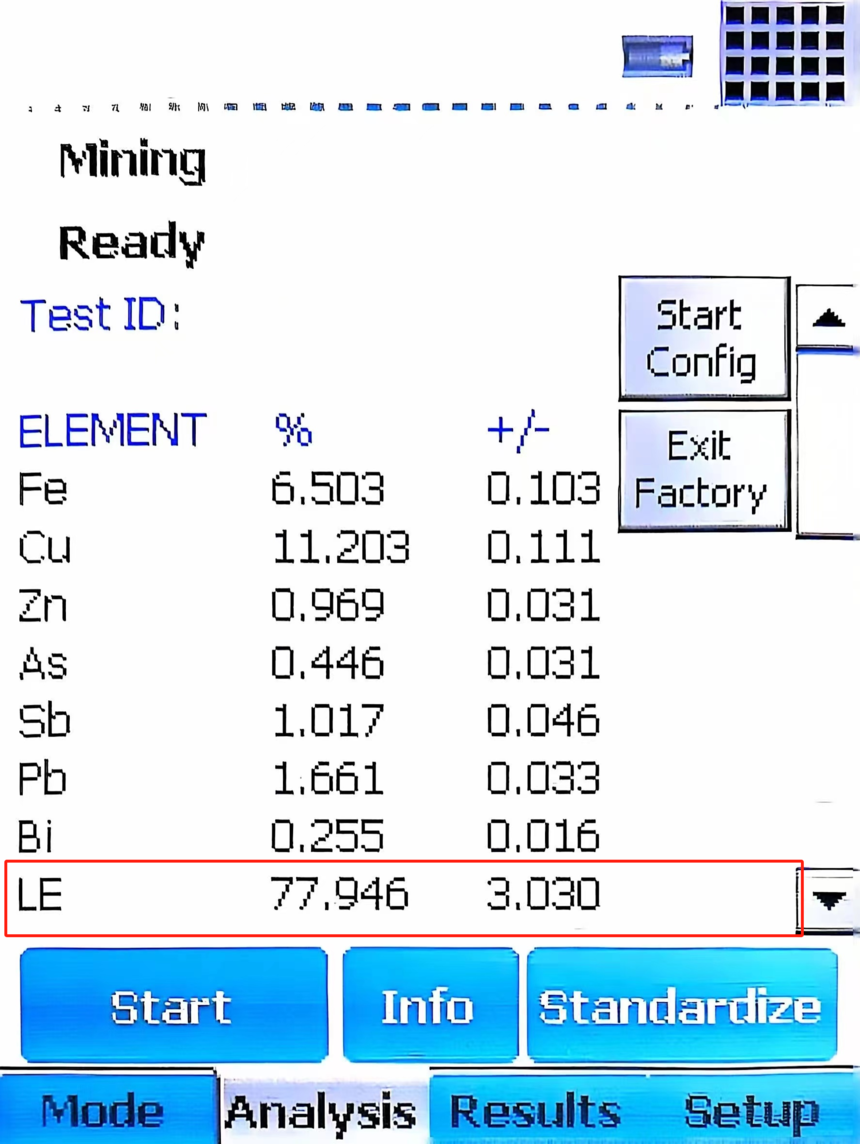
What does the "LE" displayed on the handheld spectrometer mean?When you use a handheld X-ray fluorescence spectrometer (XRF) to inspect materials and view the inspection results, you may see a symbol called "LE", followed by a percentage value.
This "LE" does not refer to a specific metallic element, such as lithium or other metals. It is the acronym of the English word "Light Elements". In simple terms, "LE" represents the combined display result of those very light elements that the instrument cannot precisely distinguish and measure. These light elements mainly refer to those with very small atomic numbers, such as hydrogen, helium, lithium, beryllium, boron, carbon, nitrogen, oxygen, etc. The reason why the instruments package and display them as "LE" is mainly due to the technical limitations of handheld spectrometers. These light elements share a common feature: when they are excited by X-rays inside the instrument, the energy of the X-ray fluorescence signals they emit is very low. The signals themselves are too weak, just like whispering in a noisy room, and the detector of the handheld spectrometer has difficulty capturing them clearly and stably. Meanwhile, the air itself will also absorb some weak signals, which further reduces the effective information received by the detector. The final result is that the instrument can sense that there may be one or more light elements in the sample, but it cannot precisely identify which specific light element it is (for example, it cannot distinguish whether it is carbon or oxygen), nor can it accurately calculate the specific content of each light element. A common misunderstanding that requires special attention is: Do not mistake "LE" for the content of lithium! Some friends think "LE" is the code name for lithium when they see it. This is completely wrong. "LE" represents the total estimated value of all light elements that cannot be precisely measured. The method by which the instrument calculates this value is usually to assume that the total sample volume is 100%, and then subtract the total content of all other elements (mainly those with atomic numbers greater than sodium) that the instrument can identify and calculate. The remaining difference is classified as "LE". So, if the test result shows "LE 15%", it by no means means that the material contains 15% lithium or any other specific light element. It only indicates that the instrument estimates that all the light elements that cannot be precisely measured add up to approximately 15% of the total weight of the sample. |