
|
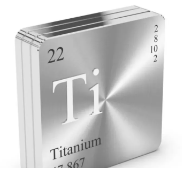
From the sky to the sea, "titanium" is no ordinary thing!There is a kind of metal with a silver-gray luster and a shape similar to steel, but it has advantages such as high strength, low density and corrosion resistance that are incomparable to many other metals. This metal is indispensable in fields such as aviation, aerospace, navigation and medical care, and enjoys the reputation of "metal of the future" and "metal of space". The metal that can reach the sky and the sea is titanium.
The Discovery and naming of titanium In 1791, William Gregor, an English priest and amateur geologist, inspected the magnetic sand of a local river. After removing the magnetic iron oxide and treating the residue with hydrochloric acid, what remained was impure white oxide of a new element. In 1795, the German chemist Martin Heinrich Klaproth independently isolated this white oxide from a Hungarian rutile mineral. He named this new metallic element "Titanium" by referring to the name of the divine race "Titanic" in Greek mythology. However, the titanium they discovered was powdered titanium dioxide rather than metallic titanium. Titanium oxides are extremely stable, and elemental titanium is difficult to produce. It was not until 1910 that the American chemist Matthew Hunter first produced metallic titanium with a purity of 99.9% by reducing TiCI with sodium. Element characteristics
The symbol for titanium is Ti. It is located in the 4th period and the IVB group of the periodic table of chemical elements. Titanium is a silvery-white transition metal with a low density, light weight and high strength. The mechanical strength of titanium is about twice that of iron and six times that of aluminum. Titanium has a relatively high melting point (1668±4 ℃) and good heat resistance. Titanium can stably exist in dilute sulfuric acid, hydrochloric acid, most organic acids, moist chlorine gas and chloride solutions. It is also relatively difficult to rust in seawater and has extremely strong corrosion resistance. Titanium ranks 9th in terms of content in the Earth's crust. It has no metallic state in nature and usually exists in the form of minerals such as ilmenite or rutile. In REDOX reactions, titanium usually exists in the +2, +3 or +4 oxidation states and carries heteroatoms. The natural distribution of titanium Titanium is relatively widely distributed in nature. Although it is not one of the most abundant elements in the Earth's crust, it still exists as one of the rare metals. The following is a detailed introduction to the distribution of titanium in nature: The distribution in the Earth's crust: Titanium ranks seventh in terms of abundance in the Earth's crust, accounting for 0.45%. It mainly exists in the form of titanium oxide (TiO₂), among which the most common ores are rutile, ilmenite and anatase of rutile type. These ores are widely distributed in the Earth's crust, especially in sedimentary rocks, volcanic rocks and metamorphic rocks. 2. Distribution in the lithosphere: Titanium is also present in the Earth's lithosphere, including the mantle and crust. In the mantle, the content of titanium is relatively high, but it mainly exists in the form of silicates and oxides. In the Earth's crust, titanium usually exists in small amounts as oxides, which is of great significance for some geological processes and the formation of ore deposits. 3. Distribution in water bodies: Titanium exists in trace amounts in natural water bodies, such as rivers, lakes and oceans. It usually exists in the form of ions rather than elemental titanium. The concentration of titanium in seawater is relatively low, approximately 0.1 micrograms per liter. 4. Distribution in soil: Titanium is widely distributed in soil and usually exists in the form of oxides. The titanium content in the soil varies by geographical location and soil type, but it is usually at the trace level. 5. Distribution in organisms: Titanium is present in almost all living organisms, including plants, animals and microorganisms. However, its concentration in organisms is very low, usually existing at the microgram level or even lower. The physiological functions of titanium for living organisms remain unclear because it is not an essential element for living things. Titanium is widely distributed in nature, but it usually exists in trace amounts. Although it is relatively abundant in the Earth's crust, extracting pure titanium metal still requires a complex smelting process because titanium is often mixed with impurities of other elements. The wide distribution of titanium is of great significance for geology, earth science and industrial applications. The application of titanium Titanium has many important application fields, mainly including: Aerospace industry: Due to titanium's excellent strength, corrosion resistance and lightweight properties, it is widely used in the aerospace field to manufacture aircraft structures, engine components, spacecraft and satellites, etc. In the medical field, due to titanium's biocompatibility and corrosion resistance, it is widely used in the manufacture of medical devices and artificial prostheses, such as artificial joints and dental implants. In the field of chemical engineering, titanium's corrosion resistance and chemical stability make it an ideal material for chemical equipment, used in the manufacture of reactors, storage tanks, pipelines, etc. In the automotive industry, titanium is used to manufacture automotive parts such as exhaust pipes, wheels, and frames, in order to enhance the performance of cars and reduce their weight. Sports goods: Due to the lightweight and high-strength properties of titanium, it is used to manufacture high-end sports goods, such as golf clubs and bicycle frames. Titanium is used in the manufacturing of components such as casings and battery cases in electronic products to enhance their durability and appearance quality. In the Marine field: In seawater, titanium has unparalleled corrosion resistance compared to other metal materials, especially in withstanding the high-speed erosion of seawater. At present, countries such as the United States, Japan and France have all developed various advanced titanium deep-sea submersibles, submarines and seabed laboratory devices for Marine research. In addition, titanium equipment and devices are widely used in coastal power stations, offshore oil extraction equipment, seawater desalination, Marine chemical production, and Marine aquaculture. Detection methods for titanium element There are various methods for detecting titanium, among which the most commonly used one is X-ray fluorescence spectrometry (XRF). XRF is a non-destructive analytical method suitable for the determination of titanium content in both solid and liquid samples. This method determines the elemental content in the sample by measuring the intensity of the characteristic peaks of the fluorescence spectrum in the sample through the X-rays generated by irradiating the sample surface. XRF has the advantages of high speed and simple operation, and it can simultaneously determine multiple elements. |